
Home to 125 tree species including ancient podocarpus yellow-woods, rare stinkwoods and towering ysterhout giants, it forms part of the Cape Floral Kingdom. This makes for a world-renowned biodiversity hotspot, boasting in excess of 8,600 plant species, of which 5,800 are endemic to the region.
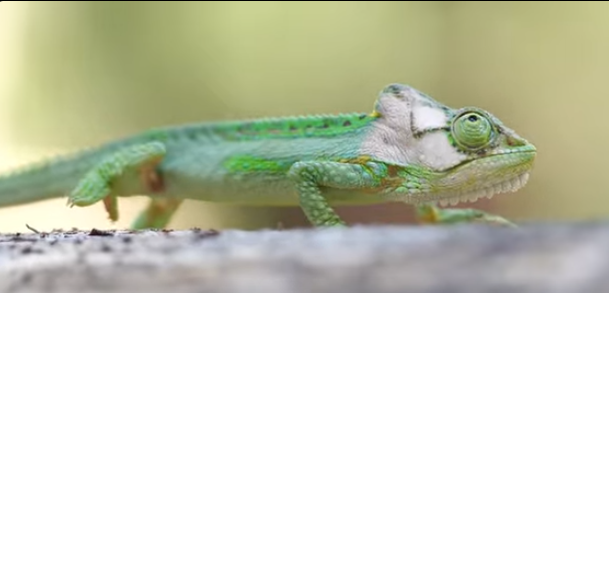
Our little dwarf chameleon friend – also known as the Bradypodion damaranum – is part of the ‘slow footed’ genus (which is pretty obvious from the video footage, I’d say). This forest dweller is limited to a miniscule range of afromontane forest in the vicinity of Knysna, and is a rarely spotted endemic resident.
The damaranum boasts the longest tail of all the Bradypodion species, and as with most chameleons, its tongue is twice the length of its body. Chameleons use their tongues to catch prey, generally insects, and can eject them at speeds of nearly 40km/hr, making it one of the fastest ‘biological projectiles’ to have been recorded in the Animal Kingdom.
The ‘Knysna Dwarfs’ are currently not listed as endangered, but are nonetheless critical to the natural diversity chain that brings equilibrium to the #WoodWideWeb. Be mindful of them, especially when trimming trees and bushes in gardens on the peri-urban edge of the Garden Route forests 
Click here to view the video
